
Elements of transmission motorcycle Triumph Rocket III (Rocket, 2004-2018)
See this section in russian language
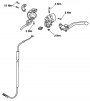
Exploded view — clutch controls
Exploded view - clutch controls
Exploded view - clutch controls

Exploded view — clutch
Exploded view - clutch
Exploded view - clutch

Exploded view — clutch cover
Exploded view - clutch cover
Exploded view - clutch cover

Clutch cable — removal and installation
Removal Warning! Before starting work, ensure the motorcycle is stabilised and adequately supported. This will help prevent it from falling and causing injury to the operator or damage to the motorcycle. 1. Remove the rider's seat as described on...
Removal Warning! Before starting work, ensure the motorcycle is stabilised and adequately supported. This will help prevent it from falling and causing injury to the operator or damage to the motorcycle. 1. Remove the rider's seat as described on...

Clutch cover — removal and installation
Removal Warning! Before starting work, ensure the motorcycle is stabilised and adequately supported. This will help prevent it from falling and causing injury to the operator or damage to the motorcycle. 1. Remove the radiator as described on page...
Removal Warning! Before starting work, ensure the motorcycle is stabilised and adequately supported. This will help prevent it from falling and causing injury to the operator or damage to the motorcycle. 1. Remove the radiator as described on page...

Clutch — removal and installation
Removal Warning! Before starting work, ensure the motorcycle is stabilised and adequately supported. This will help prevent it from falling and causing injury to the operator or damage to the motorcycle. 1. Remove the clutch cover as described on...
Removal Warning! Before starting work, ensure the motorcycle is stabilised and adequately supported. This will help prevent it from falling and causing injury to the operator or damage to the motorcycle. 1. Remove the clutch cover as described on...

Friction plate inspection
Thickness 1. If any friction plate thickness is outside the service limit, replace the friction plates as a set. 1. Clutch friction Plate Friction plate thickness - all plates Standard 3.72-3,88 mm Service limit 3.5 mm 2. Check all plates for bend...
Thickness 1. If any friction plate thickness is outside the service limit, replace the friction plates as a set. 1. Clutch friction Plate Friction plate thickness - all plates Standard 3.72-3,88 mm Service limit 3.5 mm 2. Check all plates for bend...

Sectioned view — bevel box and drive shaft
Sectioned view - bevel box and drive shaft
Sectioned view - bevel box and drive shaft
Bevel box and drive shaft specification
The Rocket III is fitted with a shaft drive coupling the transmission to the bevel box at the rear wheel. The drive shaft is fitted with a single Hookes universal joint which requires no maintenance. The bevel box consists of a crown wheel and...
The Rocket III is fitted with a shaft drive coupling the transmission to the bevel box at the rear wheel. The drive shaft is fitted with a single Hookes universal joint which requires no maintenance. The bevel box consists of a crown wheel and...

Bevel box oil level check
Warning! Before starting work, ensure the motorcycle is stabilised and adequately supported. This will help prevent it from falling and causing injury to the operator or damage to the motorcycle. 1. Remove the filler/level plug. 1. Bevel box; 2....
Warning! Before starting work, ensure the motorcycle is stabilised and adequately supported. This will help prevent it from falling and causing injury to the operator or damage to the motorcycle. 1. Remove the filler/level plug. 1. Bevel box; 2....

Bevel box oil change
Warning! Before starting work, ensure the motorcycle is stabilised and adequately supported. This will help prevent it from falling and causing injury to the operator or damage to the motorcycle. 1. Position a container beneath the bevel box drain...
Warning! Before starting work, ensure the motorcycle is stabilised and adequately supported. This will help prevent it from falling and causing injury to the operator or damage to the motorcycle. 1. Position a container beneath the bevel box drain...

Bevel box — removal and installation
Removal Before starting work, ensure the motorcycle is stabilised and adequately supported. This will help prevent it from falling and causing injury to the operator or damage to the motorcycle. 1. Support the motorcycle so that the rear wheel is...
Removal Before starting work, ensure the motorcycle is stabilised and adequately supported. This will help prevent it from falling and causing injury to the operator or damage to the motorcycle. 1. Support the motorcycle so that the rear wheel is...
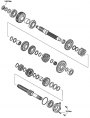
Exploded view — input and output shafts
Exploded view - input and output shafts
Exploded view - input and output shafts

Exploded view — gear change mechanism
Exploded view - gear change mechanism
Exploded view - gear change mechanism

Exploded view — gear selector mechanism
Exploded view - gear selector mechanism
Exploded view - gear selector mechanism

Exploded view — torsional damper shaft housing
Exploded view - torsional damper shaft housing
Exploded view - torsional damper shaft housing

Exploded view — torsional damper shaft
Exploded view - torsional damper shaft
Exploded view - torsional damper shaft

Selector shaft, selector forks and drum — removal and installation
Removal Note: Prior to removal, mark, or make a note of the relative positions of each selector fork in the selector drum. 1. Remove the engine from the frame as described on page 10.2 . 2. Separate the lower crankcase from the upper as described on...
Removal Note: Prior to removal, mark, or make a note of the relative positions of each selector fork in the selector drum. 1. Remove the engine from the frame as described on page 10.2 . 2. Separate the lower crankcase from the upper as described on...

Torsional damper shaft — removal and installation
Removal 1. Remove the engine from the frame ( see page 10.2 ). 2. Remove the fixings securing the gear position sensor to the torsional damper shaft housing. 3. Withdraw the sensor and collect its O-ring. 1. Gear position sensor; 2. O-ring 4....
Removal 1. Remove the engine from the frame ( see page 10.2 ). 2. Remove the fixings securing the gear position sensor to the torsional damper shaft housing. 3. Withdraw the sensor and collect its O-ring. 1. Gear position sensor; 2. O-ring 4....

Input and output shaft assemblies — removal and installation
Removal Note: The input and output shafts may be removed from the upper crankcase after first separating the lower crankcase from the upper. Note: The rear bearing on the input shaft remains in the crankcase on removal of the shaft. 1. Remove the...
Removal Note: The input and output shafts may be removed from the upper crankcase after first separating the lower crankcase from the upper. Note: The rear bearing on the input shaft remains in the crankcase on removal of the shaft. 1. Remove the...

Output shaft — disassembly and assembly
1. Ball bearing; 2. Thrust washer; 3. First gear; 4. Needle roller bearing; 5. Thrust washer; 6. Fifth gear; 7. Circlip; 8. Thrust washer; 9. Fourth gear; 10. Third gear; 11. Splined bush; 12. Thrust washer; 13. Circlip; 14. Dog ring; 15. Circlip;...
1. Ball bearing; 2. Thrust washer; 3. First gear; 4. Needle roller bearing; 5. Thrust washer; 6. Fifth gear; 7. Circlip; 8. Thrust washer; 9. Fourth gear; 10. Third gear; 11. Splined bush; 12. Thrust washer; 13. Circlip; 14. Dog ring; 15. Circlip;...

Input shaft — disassembly and assembly
1. Torx screws; 2. Bearing retainer plate; 3. Ball bearing; 4. Retaining ring; 5. Input shaft; 6. Thrust washer; 7. Belleville washers; 8. Fifth gear; 9. Fifth gear bush; 10. Thrust washer; 11. Circlip; 12. Third/fourth gear; 13. Circlip; 14. Second...
1. Torx screws; 2. Bearing retainer plate; 3. Ball bearing; 4. Retaining ring; 5. Input shaft; 6. Thrust washer; 7. Belleville washers; 8. Fifth gear; 9. Fifth gear bush; 10. Thrust washer; 11. Circlip; 12. Third/fourth gear; 13. Circlip; 14. Second...
Similar subsections of other motorcycle models
Transmission motorcycle Aprilia Shiver SL 750 (2007-2016)
Transmission motorcycle Ducati ST series ST2 (1997-2003)
Transmission motorcycle Kawasaki Vulcan VN900 (2006-2024)
- Information for owner
- Introduction to manual
- Engine and systems
- Engine repair
- Cooling system
- Lube system
- Fuel and control system
- Transmission
- Running gear and frame
- Frame and hinged elements
- Front suspension and handlebar
- Rear suspension
- Brake system
- Wheels and tires
- Electric equipment
- Equipment and devices
- Starting and charging system
- Electrical circuits
Aprilia: RS-series Shiver (map) BMW: F-series R-series K-series (map) Ducati: ST series Monster (map) Harley: Street Sportster V-Rod (map) Honda: Africa Twin CB series VTX series (map) Kawasaki: ZX-6R Versys Vulcan (map) Suzuki: DR-Z V-Strom Boulevard (map) Triumph: Rocket Street Triple (map) Yamaha: Fazer DragStar R1 (map)